North Shore Water Reclamation District
Menu
Menu
Who We Are
The North Shore Water Reclamation District (NSWRD) is a municipal body which was organized in 1914 under the North Shore Sanitary District Act of 1911. The NSWRD owns and operates more than 100 miles of intercepting sewer lines and 10 pumping stations which collect and convey wastewater from local sewer systems to Water Reclamation Facilities (WRFs) in Gurnee, Waukegan, and Highland Park, Illinois. Additional NSWRD facilities include the NSWRD Biosolids Recycling Facility in Zion, the Administration Building and Laboratory in Gurnee, and the Maintenance Building in Waukegan. The NSWRD is governed by an elected Board of Trustees and vested with full powers to tax and enact all necessary rules within district boundaries.
Office Hours
Normal Office Hours: M-F 8:00 a.m. – 4:30 p.m. Central
Office is closed Weekends and the following Holidays:
Good Friday – April 3, 2026
Memorial Day – May 25, 2026
Juneteenth – June 19, 2026
Independence Day – July 3, 2026 (Day Before)
Labor Day – Sept 7, 2026
Veteran’s Day – Nov 11, 2026
Thanksgiving – Nov 26-27, 2026
Christmas – Dec 24-25, 2026
New Years Day – Jan 1, 2027
History
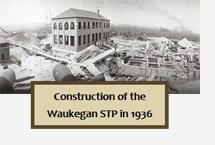
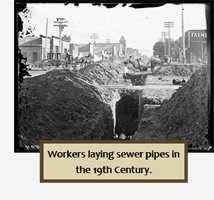
In the early years of the 20th Century, Lake County, especially the communities along Lake Michigan, was a booming place. Highland Park and Lake Forest were prosperous, fast-growing suburbs. Waukegan and North Chicago had developed into major manufacturing and commercial centers. And Fort Sheridan and the Great Lakes Naval Training Center were bustling military bases, gearing up for action as World War I loomed.
For the most part, infrastructure improvements kept pace with the growth of these lakefront communities, except in one critical area – wastewater treatment. Most of the towns along Lake Michigan discharged partially treated or untreated sewage and industrial waste directly into the lake, which, of course, was also the main source of drinking water for those same communities.
To address this major health hazard, community leaders from across eastern Lake County came together to urge the creation of a local wastewater treatment agency. In 1911, the Illinois General Assembly enacted legislation to establish the North Shore Sanitary District, which went into operation in 1914.
From its early days of treating sewage for 36,000 residents in six lakefront communities, the NSWRD now serves more than 300,000 people in 17 communities throughout Lake County including: Winthrop Harbor; Zion; Beach Park; Waukegan; Gurnee; Park City; Grayslake; North Chicago; Green Oaks; Lake Bluff; Lake Forest; Highwood; Bannockburn; Deerfield; Highland Park; Fort Sheridan; and the Great Lakes Naval Training Center. The NSWRD works in close conjunction with these municipalities, which collect wastewater from residents via local sewer systems, which in turn is transported to the District via over 100 miles of interceptor pipes. The District’s other key missions are to protect local waterways, including the region’s most precious natural resource, Lake Michigan, and develop beneficial uses for treated wastewater (effluent), including enhancing green spaces in the region.
During its first 60 years, the NSWRD operated nearly a dozen wastewater treatment plants. Since 1975, the District has consolidated its operations into three state-of-the-art facilities in Waukegan, Highland Park & Gurnee, which, on average, treat nearly 50 million gallons of wastewater each day. The three plants have all been recognized for excellence by the National Association of Clean Water Agencies.
The District faced perhaps its greatest challenge in the 1960s and 1970s with the enactment of the Federal Water Quality Act of 1965 and the Clean Water Act of 1972. The NSWRD could no longer discharge treated wastewater, or effluent, into Lake Michigan, and it undertook major infrastructure improvements to comply with the new stringent environmental laws. Lakefront treatment plants were converted to pumping stations, which moved wastewater away from Lake Michigan to the three regional treatment plants. Treated effluent is now discharged into the Des Plaines and Skokie rivers and is often cleaner than the water already flowing in those two waterways.
Originally, the five-member Board of Trustees was appointed by the Chief Judge of the Lake County Circuit Court. In 1975, an amendment to the NSSD Act divided the District into five wards and gave voters the right to directly choose Trustees, making it only one of three wastewater treatment agencies in Illinois with a Board directly accountable to the voters – and, of course, customers – of the District.
To better reflect its mission of defending and preserving our natural resources and its dedication to the beneficial reuse of our water resources, the North Shore Sanitary District changed its name to the North Shore Water Reclamation District in 2014. For over a century, the NSWRD has achieved an outstanding record of protecting the environment, especially Lake Michigan, due to both consistently upgrading its infrastructure and the diligence of the clean water professionals who work for the District.
Wastewater Treatment
Wastewater (or sewage) originates from many sources, including homes, businesses, schools and industries, and includes water from showers, sinks, dishwashers, laundries, car washes, hospitals and food processing operations. According to the U.S. Environmental Protection Agency, the average American produces 100 gallons of wastewater each day.
Most homes, businesses, and institutions are connected to a sewer system that conveys their wastewater to a public wastewater treatment plant, also known as a water reclamation facility to emphasize the beneficial reuse potential of the treated wastewater. Sanitary sewer systems carry only domestic and industrial wastewater, while combined sewer systems also carry storm water runoff. At the treatment plants, the wastewater is purified and returned to the environment to be reused.
Click on Map to View Service Area
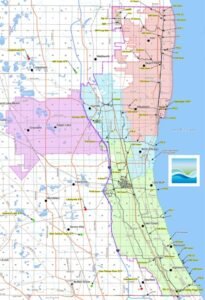
The North Shore Water Reclamation District (District) provides wastewater treatment for the eastern part of Lake County, Illinois. The District serves over 300,000 residents within its Service Area. The District owns and operates three advanced water reclamation facilities with a combined average design capacity of 63.4 million gallons a day and over 100 miles of interceptor sewers. The local collector sewers within incorporated areas of the District’s Service Area are owned by the local municipality. The sanitary and storm water sewers within the District’s Service Area are separate systems; therefore, there are no combined sewer systems.
The wastewater treated at the District’s water reclamation facilities passes through a series of five major treatment processes. In addition, the solids produced by the wastewater treatment processes are treated and disposed of separately. Wastewater treatment requires an intricate balance of physical, biological, and chemical processes which are described below:
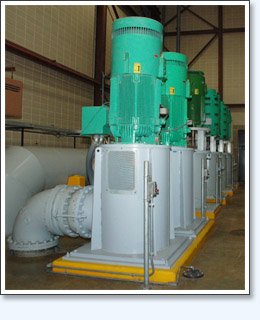
- Preliminary Treatment: Removes large objects and grit to prevent clogging of pipes and pumps downstream. Screened material is disposed of, and wastewater flows to primary treatment.
- Primary Treatment: Removes settled and floating solids, which are then treated separately in the solids handling section of the plant.
- Secondary Treatment: Uses microorganisms to digest organic material and reduce nutrients, settling as solids.
- Tertiary Treatment: Further improves water quality using deep bed sand filters, removing over 90% of solids from the wastewater.
- Disinfection: Ultraviolet light disinfects treated water before discharge into rivers to protect against pathogens.
- Solids Handling: Involves thickening and dewatering biosolids removed during treatment. Dewatered biosolids are transported to a recycling facility for drying and disposal.